Welcome to the Blackwell laboratory!
Recent News:
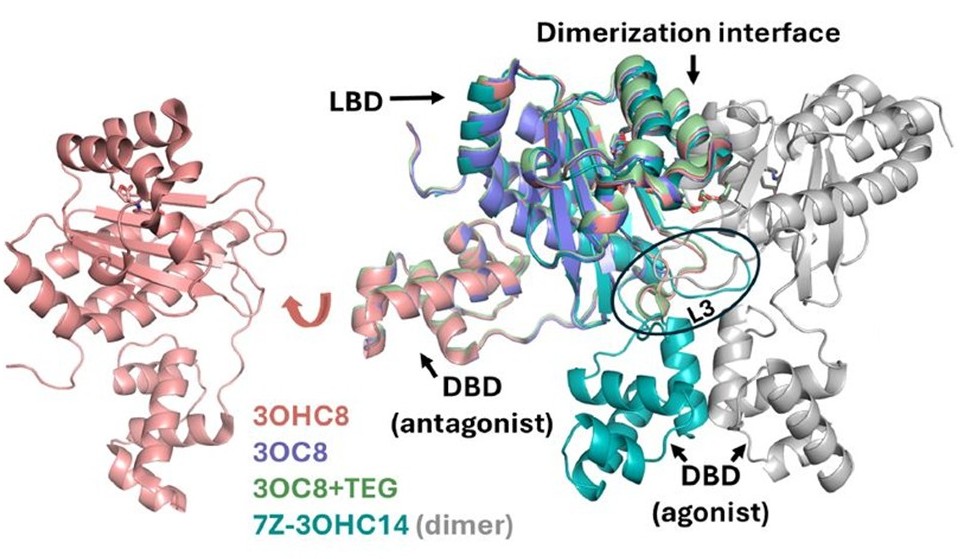
We crystallized a new LuxR-type receptor!
Recent graduate, Dr. Irene Stoutland successfully crystallized MrtR, a LuxR type receptor in Mesorhizobium tianshanense.
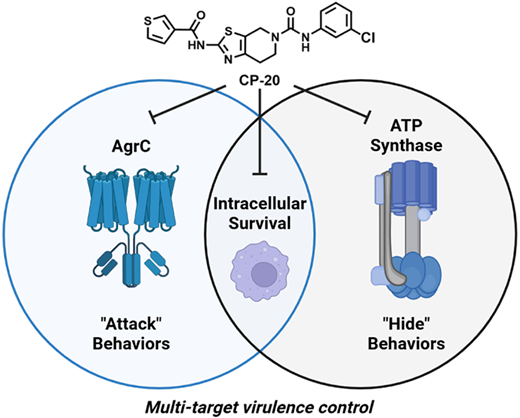
CP-20 inhibits multiple virulence phenotypes in S. aureus
Blackwell lab graduates Dr. Troy Vulpis, Dr. Jordan York and Dr. Tom Polaske along with current post-doc A.P. Clay characterized a second mechanism of S. aureus virulence inhibition for the known small molecule agr inhibitor CP-20.
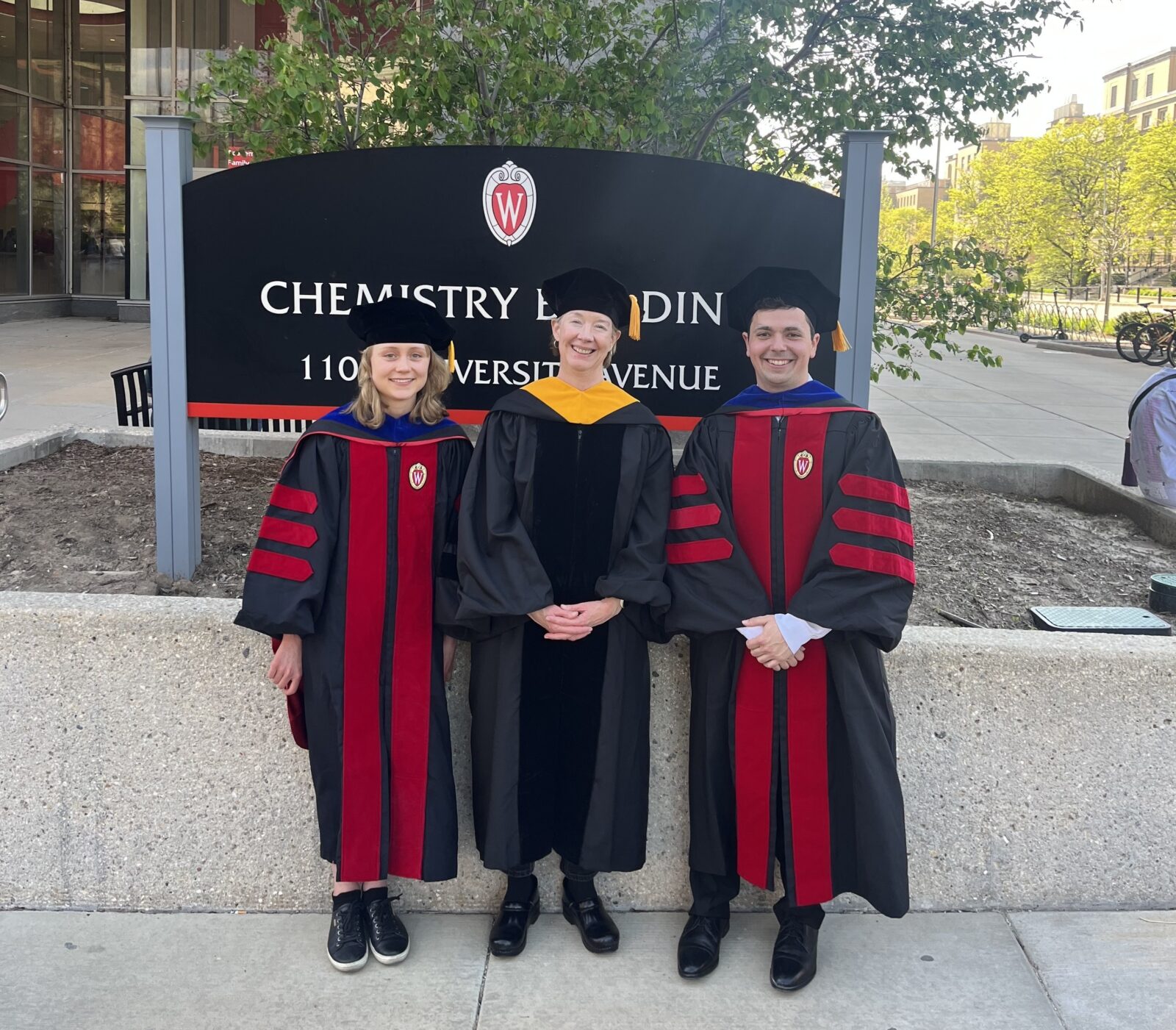
Congrats to our newest doctors!
Dr. Irene Stoutland and Dr. Troy Vulpis successfully defended their theses on May 18, 2026 and June 5, 2026 respectively. Irene will be pursuing a postdoctoral position in the Kelleher lab at Northwestern and Troy will be pursuing a postdoctoral position in Chris Chang’s lab at Princeton starting this fall. We wish them luck!
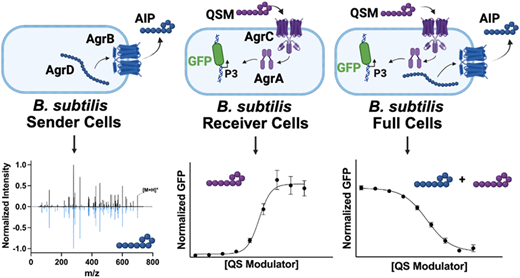
Read about our new heterologous system in B. subtilis!
Dr. Emma Eisenbraun and current graduate students Natalie Beebe, Alex Nelson and Troy Vulpis collaborated to create and characterize a new system for studying agr signaling mechanisms.
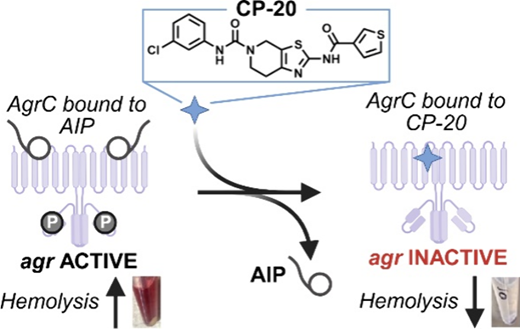
We identified the first synthetic small molecule that targets AgrC!
Dr. Tom Polaske, Dr. Kate Zhao and current students Troy Vulpis and Alex Nelson characterized the mechanism of the small molecule agr modulator, CP-20, recently identified via a high throughput screen from our lab.
We design new chemical tools to decode and interfere with quorum sensing, a type of bacterial communication.
The mission of the Blackwell lab is to (1) design and use chemical tools to interrogate the mechanisms of bacterial QS and modulate bacterial behavior in biological systems relevant to human health, (2) develop creative and engaged scientists capable of solving interdisciplinary research problems, and (3) share our knowledge and passion about QS with others. We strive to foster a safe, welcoming, inclusive, and supportive environment for people of all backgrounds, experiences, and perspectives.
For more on Helen’s thoughts on quorum sensing and our lab’s work, check out this article from UW–Madison’s College of Letters and Science’s magazine.
For a perspective on our lab’s influence on the field of quorum sensing, take a look at this article in Frontiers in Microbiology.